Posts

Malayan Union and Singapore

This White Paper The full title of this document is “Malayan Union and Singapore: Statement of policy on future constitution, presented by the Secretary of State for the Colonies to Parliament by Command of His Majesty, January 1946 (Cmd. 6724)". Attlee's cabinet formally sanctioned the proposals on 10 January 1946. The white paper was published on 22 January 1946 to coincide with the First Reading of the Straits Settlements (Repeal) Bill. This paper was replaced by a new White Paper published on 4 March 1946, which contains revised treatment on the conditions for Malayan Union citizenship (Cmd 6749). was written by George Henry Hall Hall was the Secretary of State for the Colonies between 3 August 1945 and 4 October 1946. (1881 – 1965), and was publicized after Harold MacMichael successfully obtained the signatories of all nine Malay Kings in the Malay Peninsula. The document is organized into thirteen sections and one very brief appendix : Previous positions Need f...

鄭文泉老師的「馬來西亞」

Image
拉曼大學中華研究院鄭文泉老師著有許多馬來詞源學的文章。幾年前佛光文化把這些寫在「普門」雜誌的文章匯集成一本叫「馬來梵語」的書。 書裡面有很多有問題的見解,像在第162和163頁,有關「馬來西亞」的這一篇。文章的第一句話是這樣寫道的: 「馬來西亞」由Malay-和-sia組成,前者是Melayu(馬來由)的簡寫, 後者則表示「屬於」 的意思。說白一點,「馬來西亞」這個國 家是馬來人的。 这是鄭文泉老師自己凭空想象出来的,因為據現有的資料,「馬來西亞」的「西亞」並不是梵語的屬格後綴「स्य」。 「馬來西亞」是法國人Jules D. d’Urville於1831/32年設計的 名詞 ,d’Urville的寫法是「Malaisie」,原本是指蘇門答臘、爪哇、婆羅、菲律賓這些說馬來話的島嶼(Malay insula),這裡需要注意的是:馬泰半島(Thai-Malay peninsula)並沒有在d’Urville的定義範圍。 法國人d'Urville在1832年一月在巴黎地理学会发表的四个「西亚」南岛名词: 馬來西亚 (蓝色)、 美拉尼西亚 (黄色)、 密克罗尼西亚 (青色)、 玻里尼西亞 (粉红色)。馬泰半島并没有在d’Urville的定義範圍。 同時d’Urville也設計了「Mélanésie」和「Micronésie」,這些地理名詞的構詞法是一致的: Malay 馬來 + νῆσος (nêsos = island 島嶼) μέλας (mélas = dark 玄) + νῆσος (nêsos = island 島嶼) μικρός (mikrós = small 微) + νῆσος (nêsos = island 島嶼) 美拉尼西亚的「mélas」是指的是 莱德克线 以下的 莎湖陆架 原住民皮膚的顏色,而密克罗尼西亚的「mikrós」指的是島群裡個別島成員的面積。 後來英國人把d’Urville的「Malaisie」英化成「Malaysia」。這個詞第一次是收錄在1883年第9版的不列颠百科全书里面。在第15册(Loo-Memphis)的第 323 页: . . . MALAYS (Orang Meláyu, “Malay Men”), the dominant peopl...

Melayu Raya: Magellanique, Malayunesia, Malaysia, Indunesian, Indonesia?

Image
The name Malaysia was first coined in her French form (i.e. Malaisie) by an European navigator named J. D. d'Urville to denote a group of insular nations in present-day Southeast Asia (i.e. Sumatra, Java, Borneo, Sulawesi, Philippines) in a paper read to the Société de Géographie in Paris in January 1832. (For an English translation Jules-Sébastien-César Dumont D'Urville, Isabel Ollivier, Antoine de Biran and Geoffrey Clark (2003) On the Islands of the Great Oceans, Journal Pacific History 38(2), pp. 163 - 174. The original paper is in French: J.-S.-C. Dumont d'Urville (1832) Sur les îles du Grand Océan, Bulletin Société de Géographie 17, pp. 1 - 21. , see the special issue of the Journal of Pacific History, 38(2) in September 2003) The region marked in blue is d'Urville's Malaysia. Notice that the present day Malay peninsula is not part of d'Urville's Malaysia since it is not an island. The regions marked in yellow is Melanesia, the region marked i...

Purrrification of data: Some examples

Image
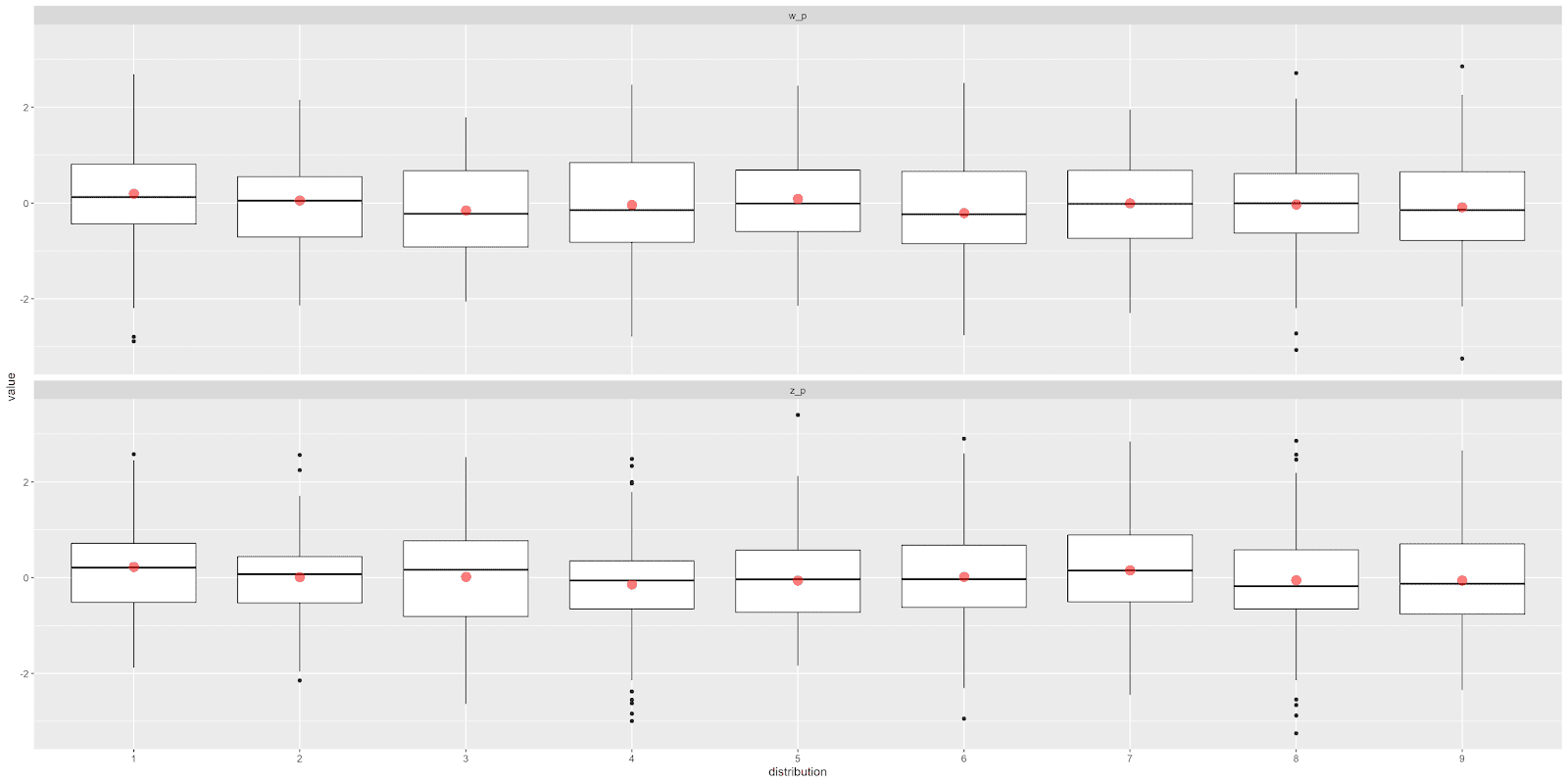
A First Example To generate a collection of 100 normally distributed random number, we use: rnorm(100) We can repeat this process indefinitely for \(n\) times, and when \(n = 9\), we have the following collections: collection_1 which we can conveniently regroup into a larger collection of random numbers: larger_collection Alternatively, we can use the rerun shorthand to define that the aforementioned collection: list_of_numbers Each of the vector $$\mathbf{x}^{(d)} = \begin{pmatrix}x_1^{(d)} & x_2^{(d)} & \ldots & x_{100}^{(d)}\end{pmatrix}, \quad d = 1, 2, \ldots, 9$$ is a collection of 100 normally distributed random numbers: $$ \ell = \{\mathbf{x}^{(1)}, \mathbf{x}^{(2)}, \ldots, \mathbf{x}^{(9)}\} = \left\{ \begin{pmatrix}x_1^{(1)}\\x_2^{(1)}\\\vdots\\x_{100}^{(1)}\end{pmatrix}, \begin{pmatrix}x_1^{(2)}\\x_2^{(2)}\\\vdots\\x_{100}^{(2)}\end{pmatrix}, \ldots, \begin{pmatrix}x_1^{(9)}\\x_2^{(9)}\\\vdots\\x_{100}^{(9)}\end{pmatrix}\...

Purrrification of factory time-series

Suppose \((t, \dot{s}_{\ell}(t))\) is the time series of liquid sugar mass flow measurement in Line \(\ell\) of a certain factory. To compute the liquid sugar mass for a given interval \(t \in [t_{\rm start}, t_{\rm stop}]\), we can integrate the time series numerically: $$s(t_{\rm start}, t_{\rm stop}, \ell)=\int_{t_{\rm start}}^{t_{\rm stop}} \dot{s}_{\ell}(t)\,dt$$ For instance, the following line totalizes the liquid sugar flow in Line 1 between 11:00 am to 12:00 pm on June 29. sugar_mass('2020-6-29 11:00', '2020-6-29 12:00', 'L1_sugar_massflow') where sugar_mass is totalizer function which parse the mass flow time series into a numerical value. Suppose you are given the task to compute the total sugar metered by flowmeters in Lines 1, 2, 4, and 6 for that same interval. A quick and dirty way would be to rewrite the original code like this: start_clock A slightly better approach is to use start_clock where all_sugar is a reusable function...

Quelling the rākṣasa in the Kingdom of Kadaknath

Image
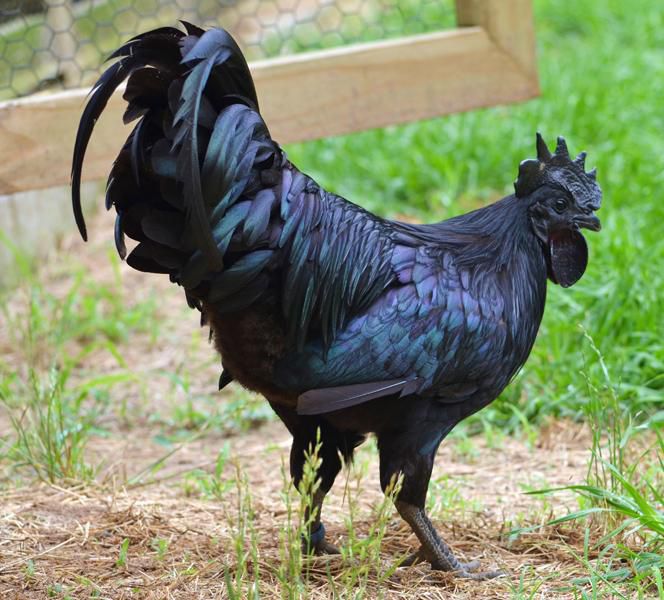
The following is the concluding conversation between Sun Wukong and Mañjuśrī Bodhisattva in Chapter 39 of The Journey to the West. This is also the story told in the first test episode of TV-adaptation of the novel (Episode name: Quelling the rākṣasa in the Kingdom of Kadaknath 除妖烏雞國) screened by CCTV in 1982. Black chickens are artificially selected for their black appearance. They can be found in many parts of the world and are known by different names: Cemani (Java), Kadakhnath or Kali masi (India), Black H’Mong (Vietnam), Argentinean Tuzo (Latin America), and Svarthöna (Sweden), Silkie (China). See Anik Budhi Dharmayanthi, Yohei Terai, Sri Sulandari, M. Syamsul Arifin Zein, Toyoko Akiyama, Yoko Satta (2017) The origin and evolution of fibromelanosis in domesticated chickens: Genomic comparison of Indonesian Cemani and Chinese Silkie breeds , PLOS ONE. The conversation started with Sun Wukong reprimanding Mañjuśrī bodhisattva for not able to control his subordinates. Wuk...

Arithmetics concerning the recent urinatorium of post-MCO Malaysia

Image
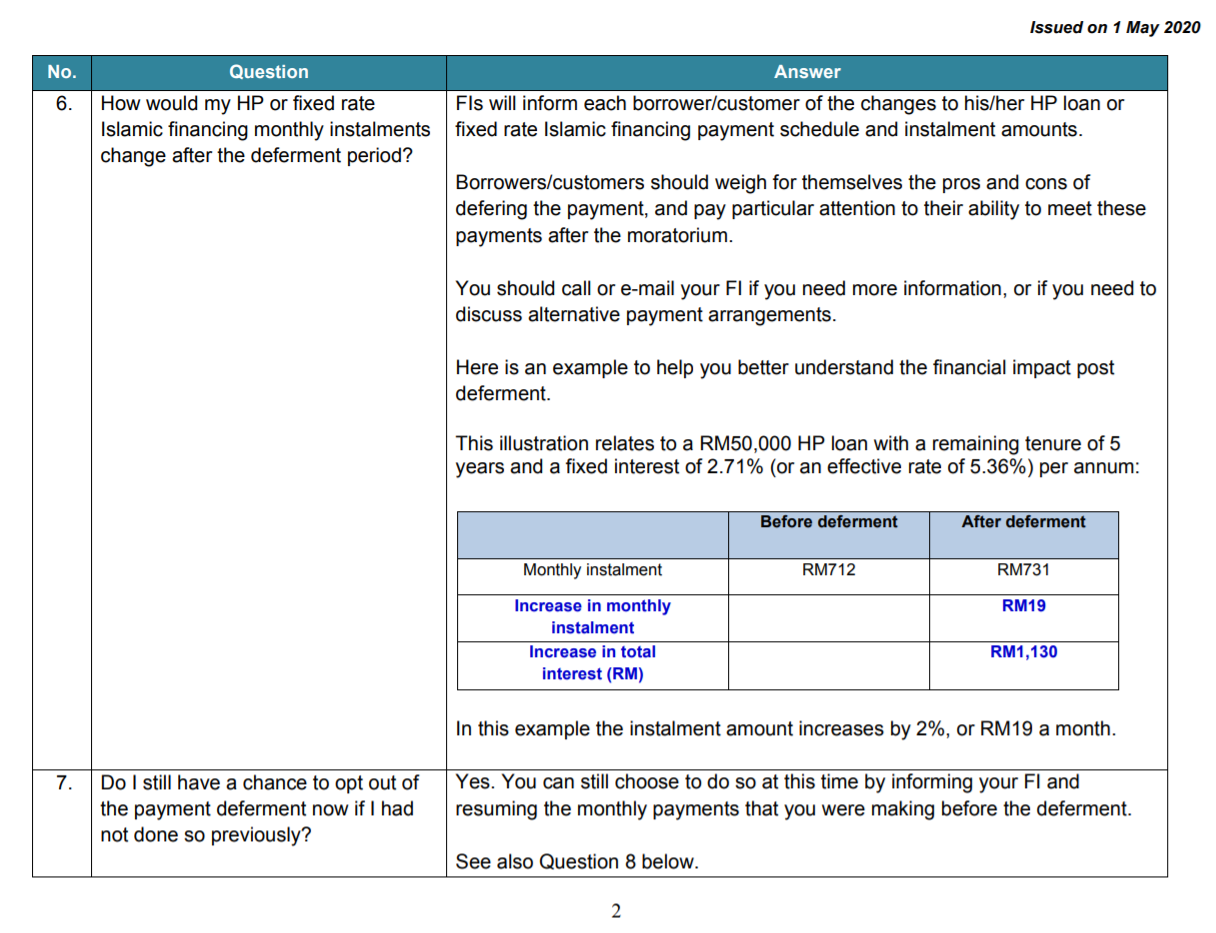
The recent example given in the BNM statement requires the use of a little bit of higher arithmetics, that is, in my opinion, beyond what the fictitious Makcik Kiah can readily verify and reproduce for other scenarios. Second numerical example issued by BNM on 1 May 2020. Apparently she was underwhelmed by new additional, albeit razor thin, 19-ringgit-add-on spread across her debt time series post-October, which is presented in stark contrast to the earlier 0-ringgit-add-on scenario exemplified In the first numerical example given by BNM, they used \(p_0 = 9\times 10^4\), \(n = 108\) terms, balance \(n_{\rm bal} = 72\) terms, \(p_0=1133\) on 27 March 2020. First numerical example issued by BNM on 27 March 2020. Fortunately she can probably consult his degree-holder son, a certain mister Liah, and ask him to verify BNM's calculations. The hire-purchase value in the simple-interest universe is quite easy to handle. The hire-purchase value for the \(n\)...

Fermat's treatment of generalized parabolic quadrature

Around 1640 Fermat documented this method in a awkwardly titled paper: De aequationum localium transmutatione et emendatione ad multimodam curvilineorum inter se vel cum rectilineis comparationem (On the transformation and alteration of local equations for the purpose of variously comparing curvilinear figures among themselves or to rectilinear figures, to which is attached the use of geometric proportions in squaring an infinite number of parabolas and hyperbolas). The ideas presented in the paper was dated probably 20 years ago but it was only written in 1658, two years after the publication of John Wallis's Arithmetica Infinitorum (1656). But it was not published or circulated until 1679. , 30 years before Newton and Leibniz officially “invented" calculus, Fermat managed to convinced himself that $$\int_0^k x^n\,dx= \frac{k^{n+1}}{n+1} = L(n+1)$$ Fermat's trick was to slice the area under the curve of \(y = x^n\) into infinitely many irregular intervals so that the ...

Infinite products of Bernoulli and Euler

Image
In 1720, Christian Goldbach's experiments with infinite series was published in the German journal Acta Eruditorum , he titled his paper Specimen methodi ad summas serierum and proceeded to furnish a number of worked examples The following examples are given in Goldbach's 1720 paper: \begin{align}\tfrac{1}{2}+\tfrac{1}{6}+\tfrac{1}{12}+\tfrac{1}{20}+\ldots\\ \tfrac{2}{64}+\tfrac{11}{544}+\tfrac{26}{1972}+\tfrac{47}{5104}+\ldots \\ \tfrac{1}{2}+\tfrac{1}{4}+\tfrac{1}{8}+\tfrac{1}{16}+\ldots \\ \tfrac{1}{3}+\tfrac{1}{81}+\tfrac{1}{19683}+\tfrac{1}{43046721} + \ldots\end{align}whose general terms are \(\frac{1}{x^2+x}\), \(\frac{3x^2-1}{9x^4+36x^3+33x^2-6x-8}\), \(\frac{1}{2x}\), and \(\frac{1}{2x^x-x}\). of his finite difference technique for relocating the general term of a given sequence. The general principle is that in the general case, the \(n\)-th term, \(a_n\), of any number sequence $$a_1, a_2, a_3, \ldots$$ can be expressed by using an infinite series involving ...

Eulerian integrals and generalized factorials

Image
Anybody with one-to-two years of basic calculus exposure can easily work out the following definite integral of \(x^n\): $$\int_{0}^k x^n \,dx = \frac{k^{n+1}}{n+1} = {\rm L}(n + 1)$$ where \({\rm L}(n) = {k^n}/{n}\). This is a mid-17th-century result known to both Newton and Leibniz , but their results were not written in modern notation In his 1669 paper “De Analysi per Aequationes Numero Terminorum Infinitas" (Of analysis by equations of an infinite number of terms), Newton wrote: Let the base \(AB\) of any curve \(AD\) have \(BD\) for its perpendicular ordinate; and call \(AB = x\), \(BD = y\), and let \(a, b, c,\) etc be given quantities, and \(m\) and \(n\) whole numbers, then following rule (Rule I) can be used to compute the quadrature of simple curves. If \(ax^{m/n}=y\), then$$\frac{an}{m+n}x^{\frac{m+n}{n}} = {\rm area} \, ABD$$Newton then proceeded to give a number of examples. He wrote: The thing will be evident by an example. If \(x^2 = y\), th...