Vamsa muntah lembu in Leyden's Malay Annals (1810/1821)
. . . a certain Raja Bachitram Shah (afterwards known as Sang Sӗperba), with two followers, suddenly appeared at a place called Bukit Siguntang Maha Meru, in Palembang, Sumatra, and the Raja described himself as a direct descendant of Alexander the Great. The story was accepted, and Sang Sӗperba became the son-in-law of the local chief; but, not content with ruling over Palembang, he sailed to Java, to Bentan (where he left a son, Sang Nila Utama), and finally back to another state in Sumatra, named Mӗnangkâbau . . .
Frank Swettenham (1906) British Malaya
. . . on the accession of a Perak ruler, Winstedt records, Toh Sri Nara Diraja reads the Chiri or Sanskrit coronation address, such as hailed his first Malacca ancestor: . . . Fortunate great king, smiter of rivals, valorous, whose crown jewels ravish the three worlds, whose touch dispels suffering, protector, pilot over the ocean of battle, confuter of opponents, fortunate overlord of kings of righteousness, supreme lord of the kingdom - Raja Parameswara . . . As at the initiation of a child into one of the higher Hindu caste, adds Winstedt, his teacher whispers the name of the god who is to be the child's special protector through life, so in the ear of each new ruler of Perak, Sri Nara Diraja whispers the State Secret, namely the real Hindu name of the demigod who descended on the Bukit Maha Meru rice-clearing in Palembang to become the ancestor and guardian of Perak royalty. Down the centuries, the tie has persisted. The descendant of the herald born from Nandi's vomit is herald to the descendant of the divine prince who rode on Nandi's back. The present holder of the title Sri Nara Diraja has held it over 20 years and in the reigns of three sultans. He is known colloquially as of the family of muntah lembu, is a grave, dignified officer with an intimate knowledge of court ritual and the history of the ancient regalia . . .
Herald from family of bull's vomit whispers state secret to Sultan, The Straits Times (2 March 1939), p. 4.
There is a country in the land of Andalus1 named Paralembang2, which is at the present denominated Palembang, the raja of which was denominated Damang Lebar Daun3 who derived his origin from Raja Sholan whose great-grandson he was.

The name of its river was Muartatang, into which falls another river named Sungai Malaiur4, near the source of which is a mountain named the mountain Si Guntang Maha Meru. There were two young women of Belitung, the one named Mpu, and the other Malini, employed in cultivating rice on this mountain, where they had large and productive rice-grounds.
One night they beheld their rice-fields gleaming and glittering like fire. Then said Mpu to Malini,
What is that light which is so brilliant? I am frightened to look at it.
“Make no noise," said Malini, “it is some great naga." Then they both lay quiet for fear. When it was day-light, they arose and went to see what is was shone so bright during the night.
- The spelling used in Leyden (1821) was Andalás. Andalas (اندالس) is the name of the white mulberry tree. It is likely that the word was borrowed from al-Andalus (الاندلس), which was a reference to Muslim-ruled Iberian Peninsula (ca. 700 - 1500). The orthographically correct spelling of al-Andalus is ‘الأَنْدَلُس'. If the last vowel is not diacritically marked, the word could be corrupted to al-Andalas by the uninitiated and the origin of the word is lost.
- Paralembang = Para + Lembang = the ultimate low land? Lembang means dent in Sundanese and it carries the same semantic weight in Malay. Lembang لمبڠ is the Malay word for low-lying swampy or broken land; mud; puddle (Wilkinson 1901, p. 607), e.g. Bumi jangan lembang, pemalu jangan patah, ular biar mati. By the pronunciation of paralembang, Ibrahim Kandu appeared to be suggesting to Leyden that the name of the city is etymologically linked to low land.
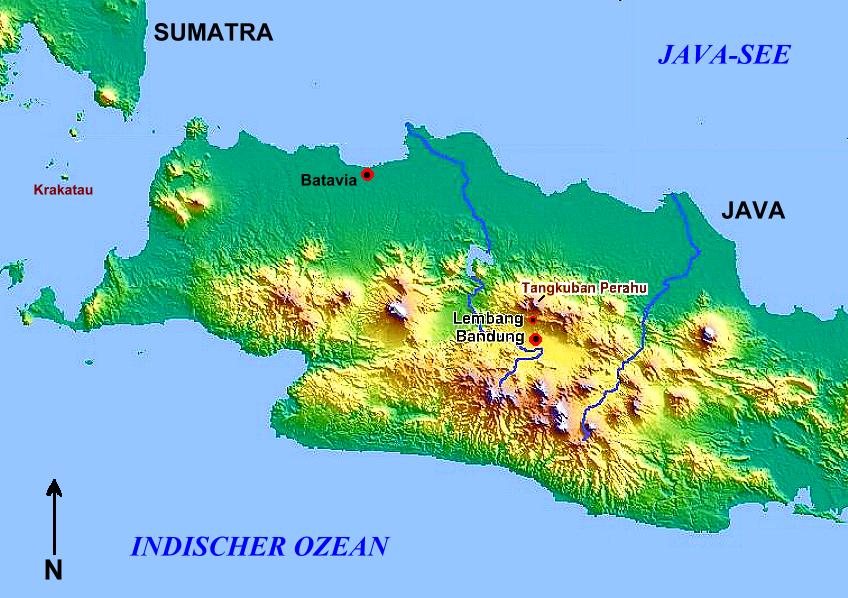
- Damang Lebar Daun = Chieftain Broad-leaf. In Javanese, damang is a title of a class of inferior public officers; a village chief. See John Crawfurd (1852) A Grammar and Dictionary of the Malay Language, Volume II, Smith, Elder and Co., London, p. 41. Damang + Lebar + Daun = Chieftain + Broad + Leaf.

- Sungai Malaiur is commonly equated with present day Jambi, but the first mention of Malaiur மலையூர் in epigraphic records suggests it was a city near Old Kedah. Mahāmēru মহামেরু is the seat of Siva in Indian mythology. Belitung is an island on the east coast of Sumatra. Muartatang is likely a corrupted form of Muara Batang (Hari).

They both ascended the hill, and found the grain of the rice converted into gold, the leaves into silver, and the stalks into brass, and they were extremely surprised, and said, “This is what we observed during the night." They advanced a little farther up the hill, and saw all the soil of the mountain of the colour of gold.

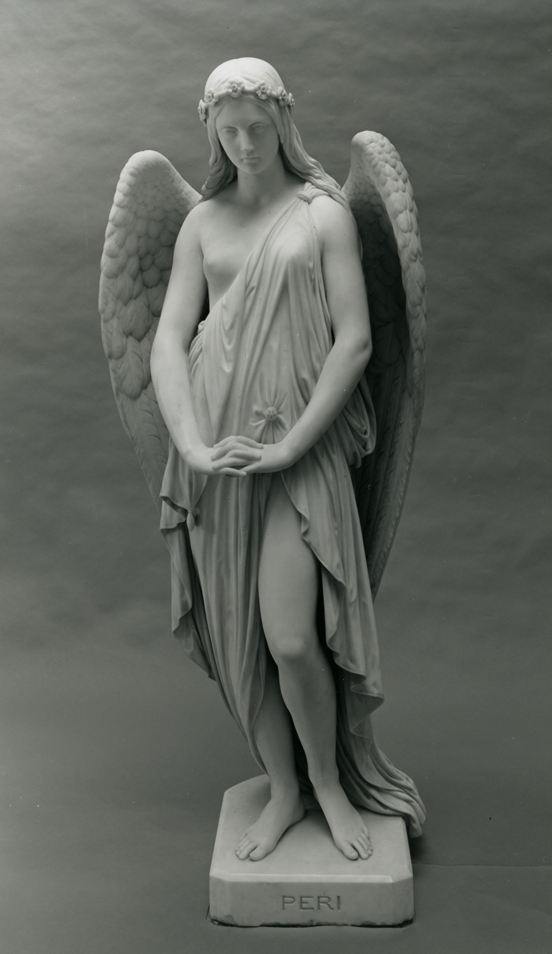
And on the ground which had assumed this golden color, they saw three young and handsome men. One of them had the dress of a raja, and was mounted on a bull, white as silver; and the other two were standing on each side of him, one of them holding a sword, and the other a spear. Mpu and Malini were greatly surprised at the handsomeness of the young men, and their elegant apparel; and immediately thought that they must be the cause of the phenomeonon which had appeared on their rice-grounds. They immediately inquired who they were, whence they had come, and whether they were Jins (جن) or Peris (پری ); for as long as they had remained in this place they had never seen any of the race of man until that day.
The person in the middle answered,
We are neither of the race of Jins or Peris, but that of men.
As to our origin we are the descendents of Raja Iskandar Zulkarnain, and the offspring of Raja Sholan, the king of the east and west; our genealogy ascends to Raja Sulaiman. My name is Vichitravirya is a king in Mahabharata, who died because of tuberculosisVichitram Shah, who am raja; the name of this person is Nila Pahlawan; and the name of the other, Karna Pandita.
This is the sword, Chora sya Mandhakini, and that is the lance, Limbuar; this is the signet, Kayu Kampit, which is employed in correspondence with rajas."
If you are the descendents of Raja Iskandar, what is the cause of your coming thither?
said the girls. Then Nila Pahlawan related the whole story of Raja Iskandar's espousing the daughter of Raja Kida Hindi, and of Raja Sholan's descent into the sea. Then Mpu and Malini asked what proofs they could produce of the truth of this relation. “Ladies," said Nila Pahlawan, “this crown is an evidence of descent from Raja Iskandar. If any farther evidence is wanting, consider the phenomenon which you have seen on your rice-grounds in coming hither." Then the girls were rejoiced, and invited them to their house, whither they proceeded, he of the centre being mounted on the white steer.

Then Mpu and Malini returned, and cut the paddy for their food. The name of the prince they changed into Sang Suprabha. The bull which was his conveyance, vomited foam, from which emerged a man named Bhat ভট্ট, with an immense turban, who immediately stood up, and began to recite the praises of Sang Suprabha (which he does very ingeniously in the Sanskrit language),
অহো স্বস্তি পাদুকা শ্রীমহারাজকা স্বরাট শ্রী সুপ্রভব
“O! May auspiciousness attend Paduka Sri Maharaja, the Sovereign, the Illustrious One.”
অনাহ রণভূমিভুজবল বিক্রমা নংকরনা মুকুটরত্ন হথত্রিভবহ স্পর্শকৃত
“The Unobstructed One in the battlefield, whose valor stems from the strength of his arms. He holds the mahkota-ratna in his hands, who by sheer force overcomes the three worlds, and whose very touch brings victory into being.”
বিনাতঙ্ক ধর্মবাহ যত সরন বিতরন সিংহাসনবনবিক্রমা বনার্ণবনাবিক সদযানুদেববিহ
“Subduer of foes, bearer of dharma, extending protection and refuge, whose throne-domain is like a vast forest and who displays heroic prowess, whose realm is fortified with troops and forests, who mercifully carries out protection and generosity.”
পরবাদি কান মূনমূনীমানিক শ্রীধর্ম্মরাজাধীরাছ রাছ পরমেশ্বরহ
“Foremost in glory, the jewel among sages, the illustrious Dharma-King, the wise and courageous sovereign, the supreme and unrivaled lord.”
- The position of the Seri Nara DiRaja in the court of Melaka must be held by an orang Kalur or orang muntah lembu.
- The word পাহকা (pahaka) is printed in Leyden (1810), it is likely a misspelt paduka. Similarly, the word ভ্রী (Bhri) is likely শ্রী (Sri), and that সুপুভন্ব (Supubha-nva) is the corrupted spelling of সুপ্রভব (Suprabha-va). Sang Suprabha is the name given to the prince on the bull by Mpu and Malini. The name can be decomposed into: Sang (honorific marker applied to an exalted person) + suprabha (handsome).
Plainly, Sang Suprabha means ‘The Handsome' and this is in line with the fact that Mpu and Malini was astounded by the physical appearance of the young men. In the Ciri printed in Leyden (1821), Sang Suprabha is spelt: সু + পু + ভ + ন্ব = SU + PU + BHA + NVA. ন্ব is a nominalizing suffix added to convert the adjective সুপুভ to noun. Note that the word in the Ciri does not conform to the standard spelling of SUPRABHA সুপ্রভ, in which the phonem প্র (PRA) is approximated by the PU-sound (পু).
- কৃঐ is very likely a corrupted form of কৃত.
- পরমেখরহ (Paramēkharah) is likely a corrupted form of পরমেশ্বরহ (Parameshvarah).
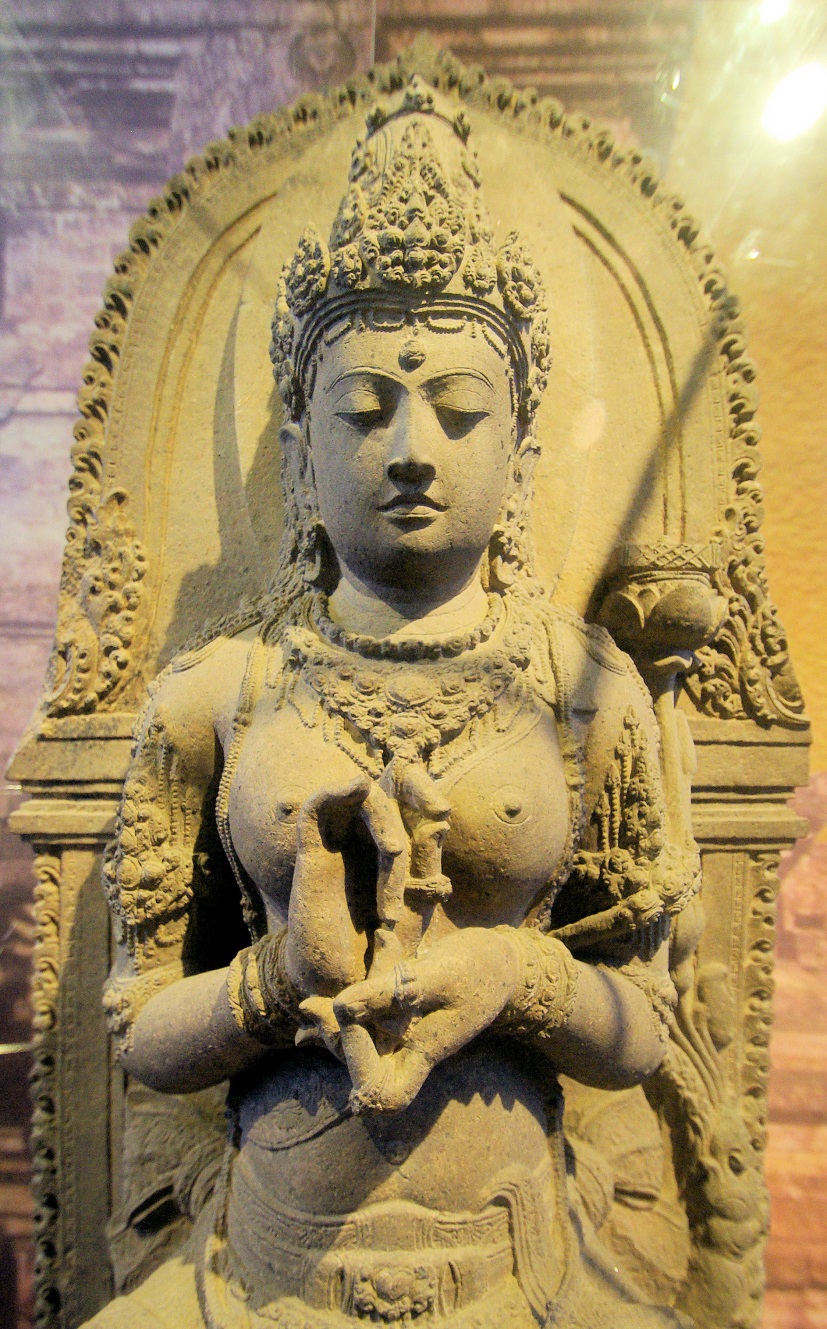
Upper body of the statue of Prajnaparamita, modelled after Ken Dedes, the first Queen of Singhasari. In Mahāyāna Buddhism, Prajnaparamita is sometimes personified as a female deity embodying the ultimate transcendent wisdom that allows one to realize śūnyatā and attain enlightenment. As the embodiment of ultimate wisdom, Prajnaparamita pervades the Tribhuvana. She is the insight that allows beings to see the true nature of the three worlds, that all phenomena are impermanent, interdependent, and empty of inherent self, $$\frac{d}{dt} \sum_\alpha \frac{\partial \mathcal{L}}{\partial \dot{q}_{\alpha} } \xi_\alpha = 0$$ just as Noether’s theorem reveals the conserved quantities that flow from symmetry in physics, which states that every continuous symmetry of a physical system corresponds to a conserved quantity: (a) Time symmetry → energy conservation (b) Space symmetry → momentum conservation (c) Rotational symmetry → angular momentum conservation
The title which the raja received from this Bhat, was Sang Suprabha Trimurti Tribhuvana. From this Bhat are descended the original reciters of Ceritas, or histories of the ancient time. Nila Pahlawan and Karna Pandita were then married by Bhat to the young females, Mpu and Malini; and their male offspring were denominated by Sang Suprabha, Baginda Awang, and the female offspring, Baginda Dara; and hence the origin of all the Awangs and Daras.

At last the chief, Damang Lebar Daun, discovered that the two girls, Mpu and Malini, had found a young raja, who had descended from the regions of the atmosphere, and he proceeded accordingly to pay his respects with numerous and rich presents. He was very courteously received by the young prince. It was soon noised over the whole country, that a descendant of Raja Iskandar had descended on the mountain Si Guntang Maha Meru, and all the rajas of the neighboring countries came, with rich presents, to pay their respects to him. As he wanted to marry, they all brought him their daughters; but as they were not of proper rank for such a noble prince, as soon as they associated with him they were stricken with a leprosy, as with a plague sent as a curse, to the number of thirty-nine. According to the persons from whom the author derives his information, the raja of the country of Palembang, which was formerly of such great extent, had daughter of extreme beauty, named Wan Sundaria.

Then Mpu and Malini made obeisance to Sang Suprabha, and represented to him that Damang Lebar Daun had a daughter: Sang Suprabha accordingly sent to ask her in marriage, but he excused himself, alledging that she would be struck with sickness, and that he would only resign her to him as a wife on certain conditions: there conditions were, that on Sang Suprabha marrying his daughter, all the family of Damang Lebar Daun should submit themselves to him; but that Sangsapurba should engage, both for himself and his posterity, that they should receive a liberal treatment; and in particular, that when they committed faults they should never be exposed to shame nor opprobrious language, but if their faults were great, that they should be put to death according to the law. Sang Suprabha agreed to these conditions, but he requested, in his turn, that the descendants of Damang Lebar Daun should never move any treasonable practices against his descendants, eventhough they should become tyrannical.
Very well, but if your descendents break your agreements, probably mine will do the same,
said Demang Lebar Daun. These conditions were mutually agreed to, and the parties swore to perform them, imprecating the divine vengence to turn their authority upside down who should infringe these agreements. From this condition it is that none of the Malay rajas ever expose their Malay subjects to disgrace or shame; they never bind them, nor hang them, nor given them opprobrious language; for whenever a raja exposes his subjects to disgrace, it is the certain token of the destruction of his country: hence also it is, that none of the Malay race ever engage in rebellion, or turn their faces from their own rajas, eventhough their conduct be bad, and their proceedings tyrannical.

After this agreement, Damang Lebar Daun delivered his daughter, Wan Sundaria, in marriage to Sang Suprabha, who returned with her to his country. After associating with the raja, it was found that she had escaped the curse of leprosy which had afflicted his former wives; to his great satisfaction, he immediately sent to inform Damang Lebar Daun of the circumstance, who came with great haste, and was rejoiced to find her in excellent health. In his great joy he requested him to pack up his baggage, and return with him to Palembang. To this proposition Sang Suprabha agreed.

After his return to Palembang, Damang Lebar Daun ordered a splendid bathing house to be constructed, and the architect was the aforesaid Bhat. This bathing house was named pancapersada, and it had seven stories, and terminated in five towers on the roof. A public festival was then made for the space of forty days and forty nights, which was attended by all the inferior rajas, mantris, sidas (eunuchs), bantaras, champions, and commons in general.
Comments