Potato eugenics
. . . also I've been thinking a lot about that question that you asked Bill Gates, ‘How do we get rid of poor people as a whole’ . . . and I have an answer/comment regarding that for you . . . When can I call you today to discuss this . . .
Barry Josephson to Jeffrey Epstein (February 2011)
Years ago, a group of rich potatoes concluded that poor potatoes were poor because they were bad potatoes. This was convenient, because it meant the rich potatoes didn’t have to feel awkward about throwing them away. They called this genetics, despite having learned it from vibes.
The rich potatoes then bred exclusively with each other, producing generations of nearly identical potatoes who all agreed with one another and described this as excellence. Anyone who looked different was removed for lowering standards.
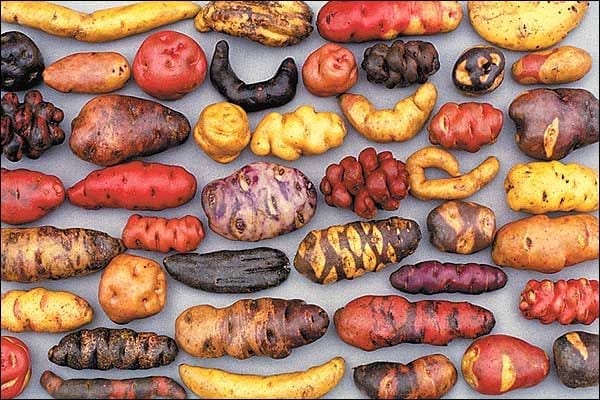
When a disease arrived, it wiped out 99% of the rich potatoes almost immediately, because the disease only needed to learn how to kill one potato and could then do the rest on autopilot.
A few poor potatoes survived, having avoided extinction by not being important enough to notice. The disease failed to harm them, possibly because they weren’t built for comfort in the first place.

Experts later described this as tragic, unavoidable, and in no way related to the rich potatoes’s earlier decisions.
The remaining poor potatoes rebuilt the population, while the idea that wealth equals superiority was carefully preserved in books written by the dead rich potatoes. And over many years, some of them became rich. This was taken as proof that the system worked. Soon after, these newly rich potatoes concluded that today’s poor potatoes were probably genetically unfit, and began removing them for everyone’s long-term benefit. Historians note that this is why potato history is best described not as a tragedy, but as a loop.


Comments