Posts

Muzaffar pitis and Mansur-Mahmud transition
Image
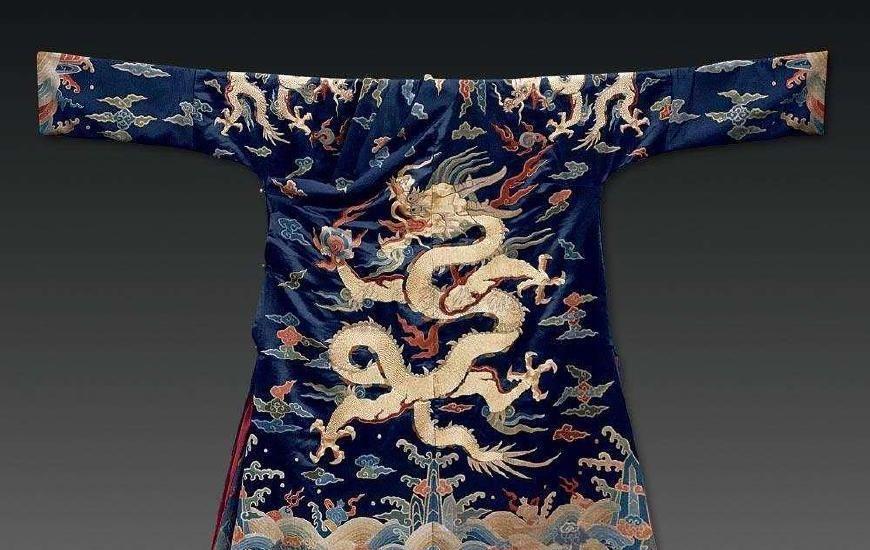
In 1445, Sri Parameswara Dewa Shah, wrote 1 to the Ming Court with a list of requests (regalia + state visit). a command paper 護國敕書 to cement his new throne a new four-claw dragon robe 2 蟒龍衣服 a new parasol 傘盖 a diplomatic trip or state visit 3 to Beijing 欲躬親來朝 a new ship 巨舟 to facilitate the travel from Melaka to China A four-claw dragon robe 蟒龍衣服 This list cast a rather skewed and embarrasing light on Sri Parameswara and his ability to rule. Indeed, we were told by Sejarah Melayu, after a short reign of 17 months, the weak king was killed in a coup d'état staged by his half-brother Raja Kassim and Raja Kassim's maternal uncle 4 , Tun Ali. The result: Raja Kassim was installed as Muzaffar. 5 Muzaffar tin pitis 6 (reverse) - Nasir al-Dunia wa al-Din ( ناصر الدنيا والدين ) - Defender of the Faith ( الدين ) and the World ( الدنيا ), written in Tughra style. ...
Calendrical data in Hikayat Raja Babi

Image
The Ian Proudfoot (2002) AHAD: A macro for converting Muslim and Christian dates. This implementation of the al-Battani type arithmetic Islamic calendar was first written in February 2002 and last revised in May 2008. See also Ian Proudfoot (2006) Old Muslim calendars of Southeast Asia, Leiden, Brill. calendrical algorithm employed by the late ANU scholar Ian Proudfoot in his AHAD spreadsheet macro is a variant of the arithmetic Islamic calendar, and it is based on the earlier work by Greville S. P. Freeman-Grenville (1963) The Muslim and Christian calendars; being tables for the conversion of Muslim and Christian dates from the Hijra to the year A.D. 2000, Oxford University Press, London. Freeman-Grenville . The algorithm can provide a convenient initial value to approximate the Gregorian equivalent of an Islamic date. However, because the sunset of the prior day vs. midnight datum of a given weekday is different in Islamic reckoning and Gregorian reckoning, unless the we...

Menteri-eating tiger

Image
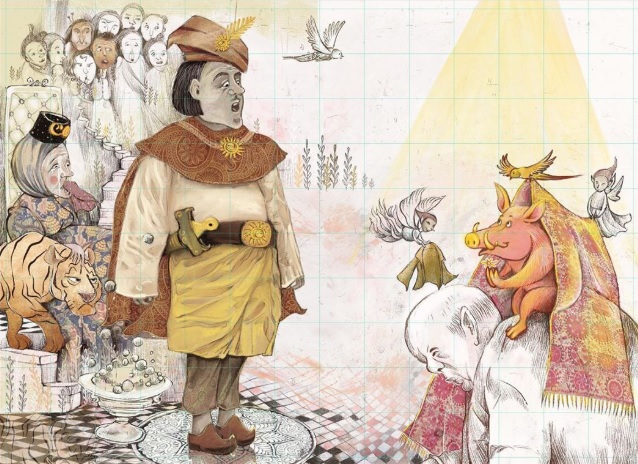
The following sentence is the plain classical Chinese rendering of the scene of a Chinese tiger devouring Yongchun oranges (華南虎吃福建永春蜜柑): 虎 食 柑 Its English Here, we equate Yongchun oranges to mandarin oranges (or Chinese oranges). The word “mandarin", curiously, is etymologically linked to the Sanskrit word “mantrin" (ministers working for the kings) and its Malay cousin is “menteri". The word can be used to refer to Asiatic government officers in generally, but it is most frequently employed to point to Chinese officials (or as a marker for items of Chinese origin) narrowly. equivalent is approximately: Tiger eats mandarins In both English and Chinese, the order of the articles is important because the order reflect the identify of the actor, \({\rm A}_{\rm actor}\) (主) and the actee, \({\rm A}_{\rm actee}\) (宾), where actor is placed in front of the act, \(\alpha\) (謂), and the actee is placed after the act. $$({\rm A}_{\rm actor}) ...

From Gauss's mean error to Yule's standard error

Image
To fully appreciate the math we are about to discuss, we must first rewind our clock to 1911. Udny Yule was enrolled into University College London at the young age of 16, where he remained from 1887 to 1890. Among his teachers were Karl Pearson (then Professor of Applied Mathematics), Alexander Kennedy (Professor of Engineering), J. A. Fleming (Professor of Electrical Engineering), J. M. Hill (Professor of Mathematics), C. Foster (Professor of Physics). While Yule was working with Heinrich Hertz in Bonn, Pearson offered him a role as demonstrator at UCL which he accepted, and he occupied this position from 1893 to 1896 (the year he was promoted to Assistant Professor of Applied Mathematics). 1911 is an important year for students of statistics. For one, the world's first statistics department was founded by Karl Pearson (1857 – 1936) in UCL. And two, the world's first statistics textbook was published by Udny Yule (1871 – ...

Modeling of sample mean by a process engineer a Victorian beer factory

Image
The following example is taken from Dalgaard (2008, p. 97), who, in turn, got his data from Altman (1991, p. 183). In 1986, Manocha and his colleagues studied eleven healthy female subjects (aged 22 to 30) for ten days, and took careful measurements of their daily calorie intakes, \(\varepsilon_{kj}\), where \(j\) is the day index. Here, \(\varepsilon\) is energy intake data. But it can be anything numeric depending on your use case. In the table, we see that Manocha condensed 110 data points (\(\varepsilon_{kj}\)) into 11 data points (\(\varepsilon_k\)). See Peter Dalgaard (2008) Introductory statistics with R 2nd edition, Springer Science + Business Media, LLC, New York. And also Douglas G. Altman (1991) Practical statistics for medical research , Chapman & Hall/CRC, Boca Raton. S. Manocha, G. Choudhuri, B. N Tandon (1986) A study of dietary intake in pre- and ...